Plots in Malaga - buy, sell or rent easily

Find plots by category in Malaga (Province)


Plots for sale with most wanted features
- Urban 50
- Developable 32
- Non developable 59


Latest publications of land and houses for sale in Malaga (Province)
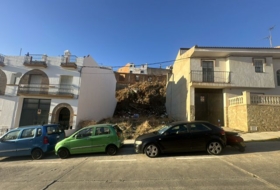
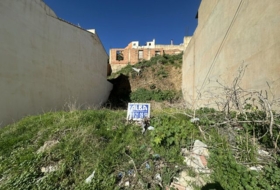
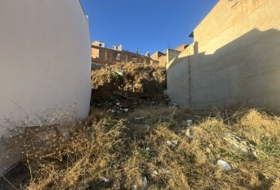


















Where to buy land in Malaga
The average value of urban land in Malaga is the highest in Andalusia (more than €240/m²), the areas with the cheapest urban land for sale are: Antequera, Malaga, Estepona or Rincón de la Victoria, as well as other locations from the interior of the province. On the other hand, the most expensive plots are in Malaga, Marbella, Torremolinos, Vélez-Málaga and Fuengirola. And is that, a large part of the population is grouped in the coastal area, which generates an increase in demand and, consequently, a higher average value of between €700/m² to more than €3,000/m².
In general terms, the cheapest land in the province of Malaga is found in the municipalities of Almogía with a minimum value of €0.50/m², followed by Cartajima with €2.30/m², Casabermeja with €3.10/m². m², Cártama with €3.20/m² and Alozaina with €3.50/m². The price is so low in these locations because it is affected by the amount of undeveloped land for sale in these areas.
High demand shoots up the average value of urban land
The province of Malaga is in the south of Spain, in the south-central part of Andalusia. It is the smallest territory of the entire autonomous community, with just over 700,000 hectares, which represents about 8% of the Andalusian region. Its climate, directly influenced by the Mediterranean Sea, is characterized by its long and hot summers, as well as its mild summers. Agriculture and industry are struggling to consolidate in a place where tourism is the base of the economy. Having the smallest extension and a large influx of tourists, it has a very high population density, which causes a high demand and value.
A nature conditioned by the influence of the climate
The main features of the Malaga landscape are the Betic Mountain Ranges, located in the southwest of the region, and the long coastline, which exceeds 150 km. With more than 600,000 hectares of rustic territory, Malaga is a province that allocates more than 40% of its surface to agriculture. Its municipalities with the greatest agricultural influence are Vélez-Málaga, Antequera and Ronda.
The most important crops are those typical of a place bathed by the Mediterranean Sea. In this way, cereals, vines, and olive groves stand out. Although, fruit trees, legumes and vegetables also have some relevance. The forest land, with more than 200,000 hectares, has a large area, divided into open forest, timber forest and woody forest.
The 'Costa del Sol' monopolizes all the foci of urban and developable land
Malaga is a province that registers a high demand for land, much higher than the national average. This translates into extensive urban areas, which cover more than 40,000 hectares, and developable, with more than 25,000 hectares. It also has a large extension of residential land that exceeds 10,000 hectares, especially concentrated in the coastal area. The largest municipalities with the highest population index are Malaga, Marbella, Fuengirola, Estepona and Torremolinos.
It should be noted that it is one of the places in Spain with the largest area of developable territory, which has not stopped growing in recent years. The high demand for land, especially near the coast, has led to an increase in urban areas.
Technological development, the main characteristic of the industry
Malaga is a place where the application of new technologies has allowed great industrial development. In its more than 1,000 hectares of industrial land, the transport, logistics, agribusiness, ICT, and energy efficiency sectors stand out.
In a place where tourism is the owner and lord of the economy, the industry has become strong, with more than 17 industrial estates. Among all of them, the most important are Guadalhorce, El Viso, Azucarera, Antequera and the Santa Bárbara Business Park. In all of them, there has been outstanding technological development, which has become an opportunity and an element of competitiveness for companies.
Malaga, a great tourist attraction in continuous industrial and agricultural development
Malaga is a province exploited urbanistically, where the sun and beach tourism is the main base of the economy. It is one of the main tourist spots in the country. However, its agriculture and its industry are reinvented day by day to consolidate itself in a region that has a strategic location, bordering two great industrial powers of Andalusia such as Cádiz and Seville.